
Dive Trips · Advanced · Playas del Coco
Scuba Diving the Bat Islands
Bull sharks, up close, at a site called the Big Scare — inside a protected marine reserve off Santa Rosa National Park. It's advanced diving, and it's the reason a lot of divers fly to Costa Rica.
The Bat Islands, or Isla Murciélago, in Costa Rica
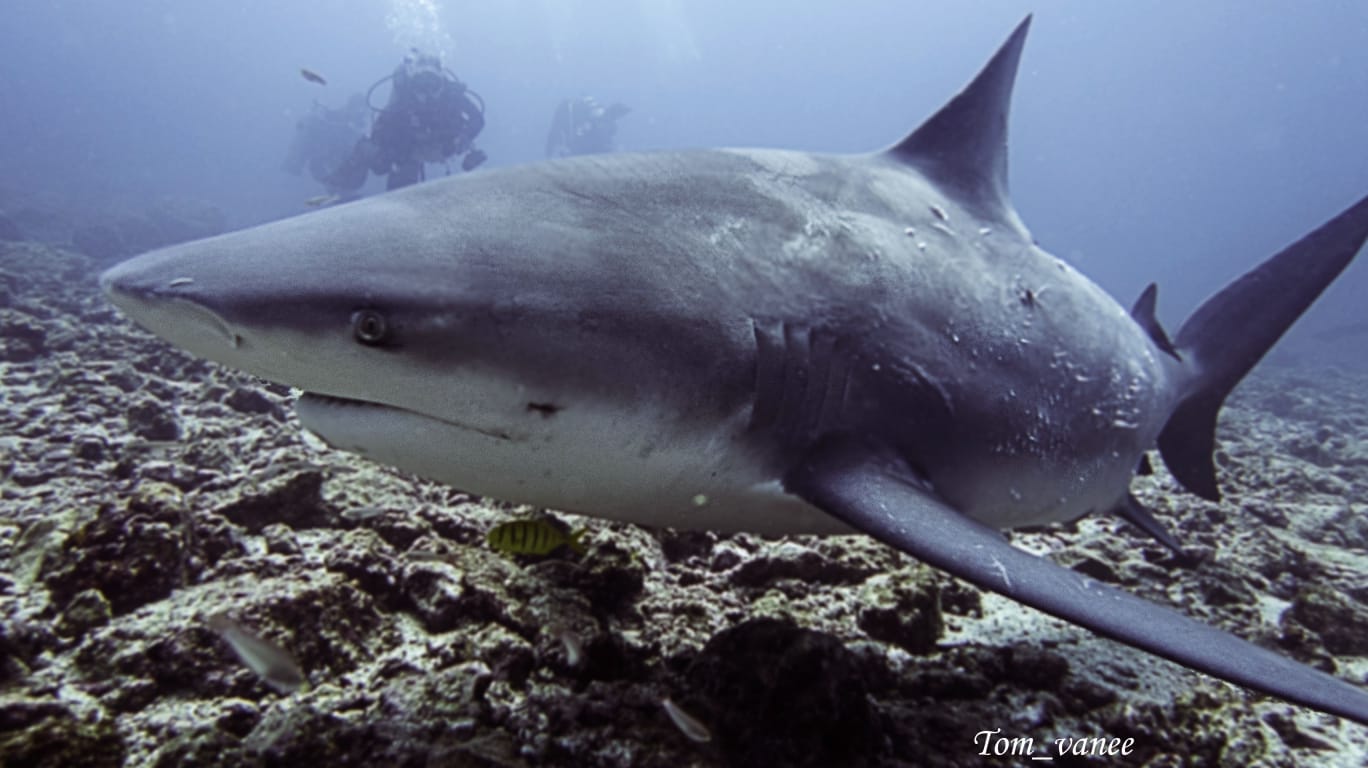
The Bat Islands are one of the premier scuba diving destinations in Costa Rica. Located in the far north of Guanacaste off the coast of Santa Rosa National Park, the area has been protected as a marine preserve by the country as part of the national park. The Bat Islands are full of marine life — huge schools of fish ranging in size from small to huge, and massive schools of rays that pass through the area. For divers, the area is most famous for the encounters you can have with the very large bull shark.
Bull shark diving the Bat Islands
To dive the Bat Islands you travel by boat about 30 miles offshore from the town of Playas del Coco in Guanacaste. The boat travels straight across the Gulf de Papagayo to the Bat Islands. These waters are heavily influenced by the wind, so sea conditions are evaluated daily before embarking on this adventure. When you reach the Bat Islands you'll be diving a site called Big Scare, at the outermost island of the chain, where you'll find the often-feared bull shark — which can easily reach 6 to 7 feet in length. This is the only location in Costa Rica where you can dive with bull sharks. Due to the possibility of strong currents, this area is not recommended for the new diver, and the dives can be quite deep, sometimes reaching over 100 feet (30 meters).
Visibility varies greatly here. The best visibility is usually during the months of May to November, when the winds are a little less extreme. Visibility ranges from 30–100 feet and can vary greatly even during the same dive. Thermoclines can be intense. Water temperatures are generally a little warmer from May until November, with the air a pleasant high-80s to mid-90s Fahrenheit (25–30°C).
More than bull sharks
Another huge attraction at the Bat Islands is the Pacific Giant Manta. These mantas, which are also found on our Catalina Island diving trips, are the largest of the species in the world. They're joined by schools of their smaller relative, the devil ray. The much smaller devil rays can sometimes be found in schools of hundreds and even thousands, majestically travelling through the water eating plankton from these nutrient-rich waters.
Dive map of the Bat Islands

Ready to make some bubbles?
If bull sharks are on your Costa Rica list, this is the trip. Tell us your dates and your certification level, and we'll build the day around the best conditions.
Book your Bat Islands dive with Rocket Frog Divers →