Picture it: you’re kneeling on the sand at around 90 feet, the current tugging gently at your fins, and the blue in front of you is just… empty. Then it isn’t. A bull shark slides in from the edge of your vision — thick through the shoulders, unhurried, close enough that you forget to breathe for a second. That’s The Big Scare. And it’s exactly why divers cross the water to find it.
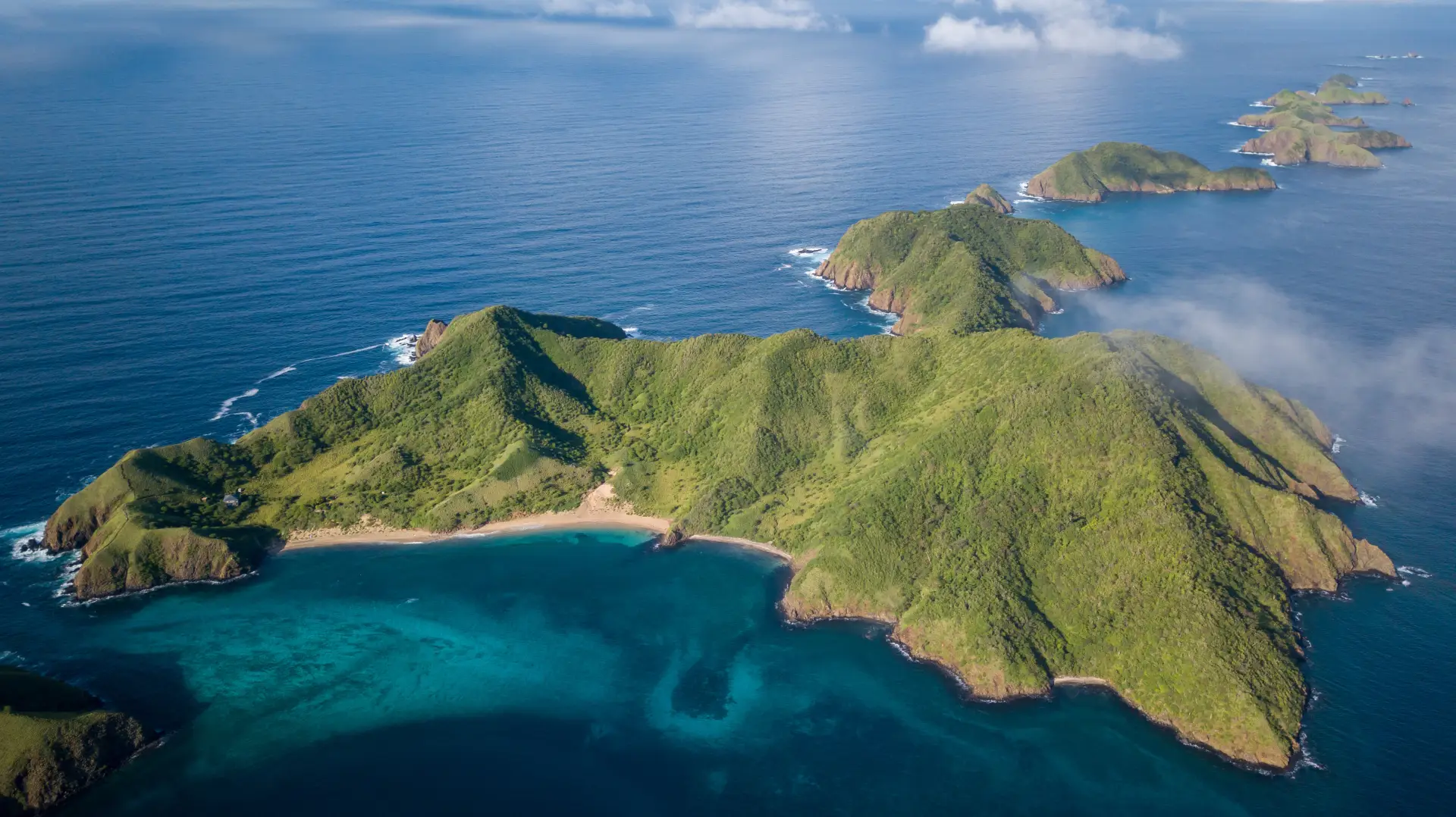
Diving with bull sharks in Costa Rica happens at one place worth flying for: the Bat Islands, off the northern tip of Guanacaste. From our dock in Playas del Coco it’s about a 50-minute run to the edge of Santa Rosa National Park, where these islands sit in open, current-swept water. It’s advanced diving. It’s seasonal. And it’s some of the biggest-animal diving on the whole Pacific coast.
The Bat Islands are the reason a lot of people book Costa Rica
The Bat Islands (Islas Murciélago) are a scatter of rocky islands at the far edge of Santa Rosa National Park. No resorts, no crowds, no other boats jockeying for the same patch of reef. Just open Pacific and big animals passing through.
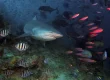
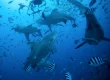
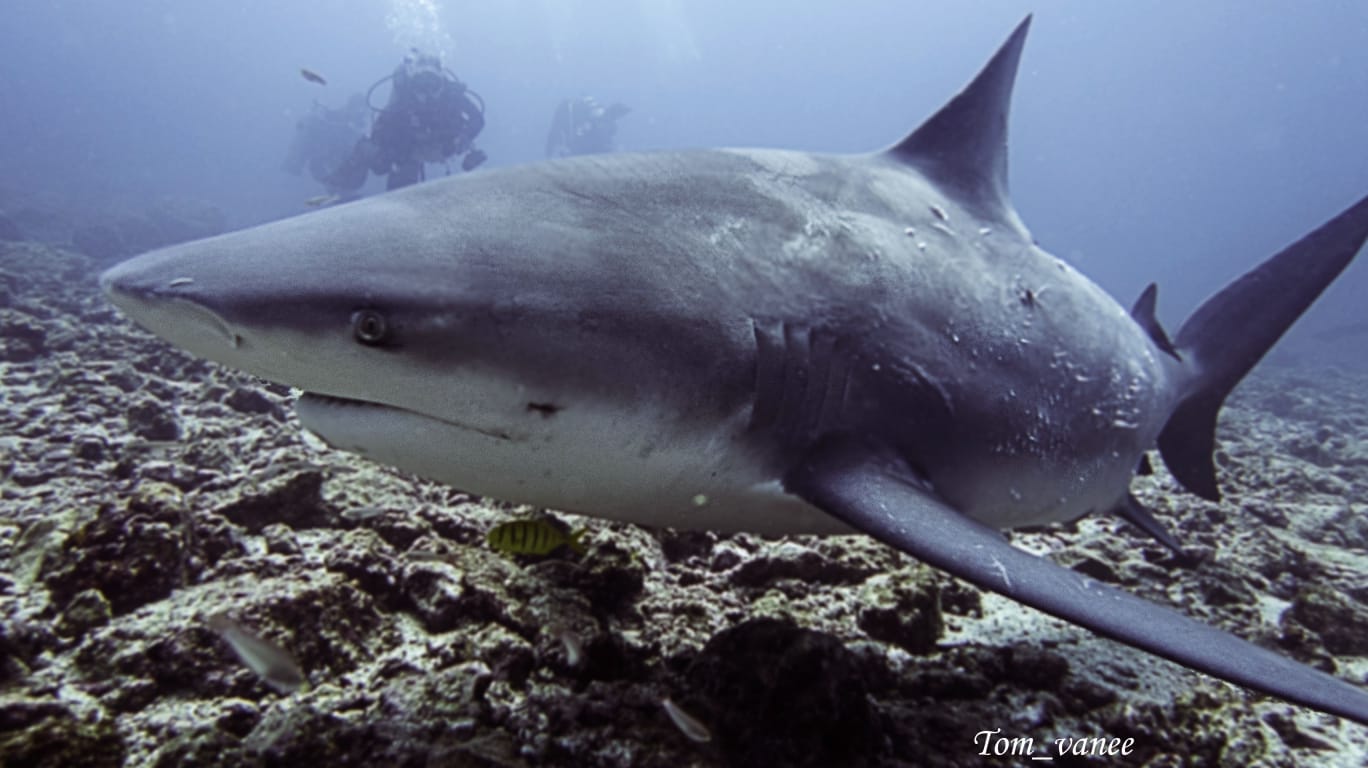
The headline site is called The Big Scare, and the name is doing some honest advertising. This is one of the only reliable spots in Costa Rica to get eye-to-eye with bull sharks — a stocky, confident, genuinely large shark that shows up here in real numbers during the season. We’re talking animals seven, eight, sometimes nine feet long, moving through like they own the place. Which, out here, they do.
What diving with bull sharks in Costa Rica is really like
Here’s the shape of a typical dive at The Big Scare. You descend to the sand, find your spot, and settle in — usually kneeling or holding position in the current rather than swimming around. Your guide picks the line and gives you the plan before you ever get wet. Then you wait and watch the blue.
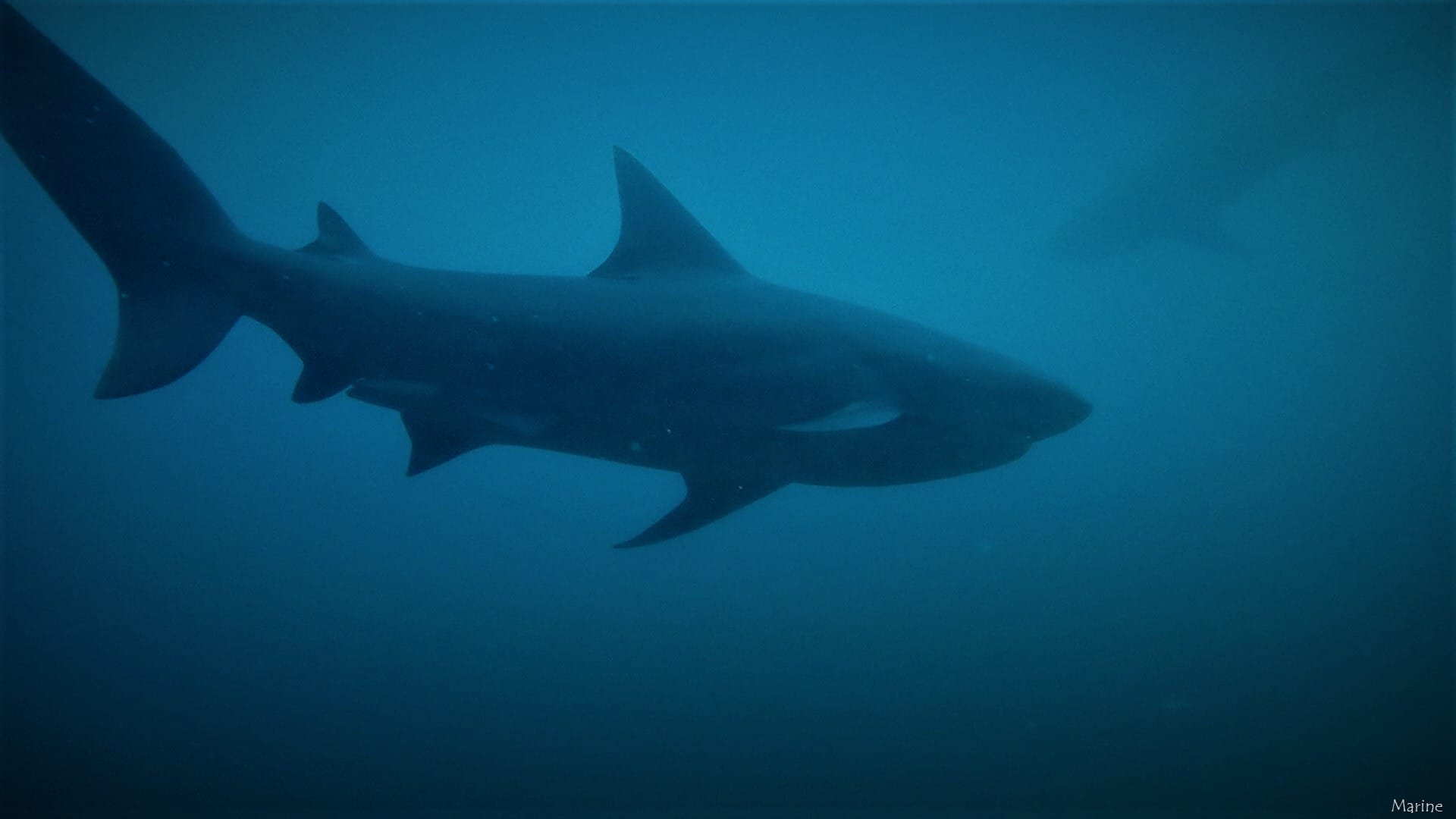
The bulls don’t announce themselves. One second there’s nothing, the next there’s a shark filling your frame, gliding past at a distance that feels a lot closer than it technically is. No cages. No feeding. No chumming. These are wild sharks behaving like wild sharks, curious but calm, and the whole thing is weirdly peaceful once your heart rate settles. You’ll surface grinning and talking too fast.
A few things people don’t expect:
- They’re bigger in person. Photos flatten them. In the water, the sheer bulk is the part that gets you.
- It’s a real dive, not a stunt. Depth, current, and a bit of patience are all part of it.
- Sightings aren’t guaranteed. They’re wild animals. Most season days deliver, but the ocean doesn’t sign contracts, and we’d never pretend otherwise.
Why the Bat Islands are advanced-only (and we mean it)
We love this trip, and we’re careful about who we take. The Bat Islands ask more of you than our local sites do, for good reasons:
- Current. The Big Scare can run strong, and you need to be comfortable holding position and managing your buoyancy in moving water.
- Depth. This is deeper diving, so solid air management matters.
- The crossing. The 50-minute run over open water can get bouncy, and honestly, from roughly December through March it’s often too rough to attempt at all.
That’s why we ask for an Advanced Open Water certification and some experience under your weight belt before the Bat Islands. It’s not gatekeeping for its own sake — it’s what keeps the dive fun instead of stressful. Getting Enriched Air Nitrox certified is a smart add-on too, since it stretches your bottom time on those deeper dives and leaves you feeling fresher between them.
One honest comfort note: the water here is warm, but it’s not the bathtub you’d get diving in the Philippines or elsewhere in Asia, and thermoclines can slide through and chill you, so we tend to put Bat Islands divers in a little more wetsuit than the tropics might suggest.
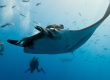
Best season is roughly May through November, which lines up with better water and a more cooperative crossing. Come in our busy December–March window and the bull sharks may be off the table — but the good news is the boats simply pivot to the local Papagayo sites and the Catalina Islands, where manta season is its own kind of spectacular.
How we run the Bat Islands trip
The distance is where our boats earn their keep. Our fleet is fast and purpose-built, so that open-water crossing takes us less time than it takes a lot of operators — which means more of your day spent diving and less of it pounding across the swell. Smaller groups, thorough briefings, guides who know exactly where the sharks tend to show and how the current behaves that day.
The rule out here is simple: look, don’t touch. We’re guests in a national park, sharing the water with animals that were doing fine long before we showed up with tanks. Watch, hover, soak it in, and leave it exactly as you found it. That’s how The Big Scare stays worth the trip for the next boat too.
Frequently Asked Questions
Do I need to be an advanced diver to dive with bull sharks in Costa Rica?
Yes. We ask for an Advanced Open Water certification and some real experience because of the current and depth at The Big Scare. If you’re not there yet, we can get you certified while you’re here and build up to it.
When is the best time to dive the Bat Islands?
Roughly May through November. Water conditions are better and the open-water crossing is far more likely to cooperate. From December to March the run is often too rough, so trips focus on local sites and the Catalinas instead.
Is it dangerous to dive with bull sharks?
These are wild sharks, so we treat them with respect — but the dives are calm, guided, and there’s no feeding or baiting involved. Follow your briefing, stay with your guide, and it’s an incredible experience rather than a scary one, despite the site’s name.
Are bull shark sightings guaranteed?
No honest operator can promise wild animals. During season the odds are excellent, but conditions and the sharks themselves have the final say. We’ll always give you a straight read on the day.
The first time a bull shark ghosts past you at the Bat Islands, something rearranges itself in your brain. You’ll be back on the boat, salt drying on your face, already asking when you can do it again. We get it. We never got over it either — that’s the whole reason we’re still out here making bubbles.
Ready to make some bubbles?
Bull sharks at The Big Scare are a May-to-November thing, and advanced spots on the boat fill up fast. Tell us your dates and we’ll help you plan the Bat Islands trip — or get you Advanced-certified before you go.